

Styling Artisan Jewelry for Professional Settings
Table of Contents
- Why Artisan Jewelry Belongs in Your Work Wardrobe
- Statement Jewelry for Work: Choosing Pieces That Command Respect
- How to Style Statement Earrings for Work Without Overdoing It
- Business Casual Jewelry Ideas for Every Dress Code
- Handmade Jewelry for the Office: Wearability and Care
- Layering and Balancing Artisan Pieces for a Polished Look
- Building a Versatile Rotation of Jewelry Pieces
- Conclusion
- Frequently Asked Questions
Last Updated: October 18, 2026
Why Artisan Jewelry Belongs in Your Work Wardrobe
Artisan jewelry is handcrafted jewelry made in small batches by skilled makers, and it earns its place at work because it carries detail no mass-produced piece can match.
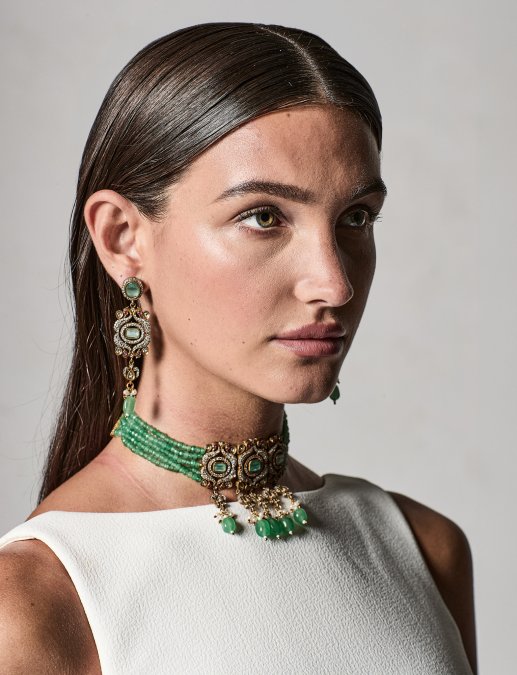
Most workwear advice tells you to keep accessories small and safe. That guidance is dated.
A sculptural earring or a bold cuff signals confidence in a way a plain stud cannot. The trick is proportion, not restraint.
Statement Jewelry for Work: Choosing Pieces That Command Respect
Statement jewelry for work succeeds when one piece leads and everything else supports it. Choose a single bold accent, keep the rest understated, and let craftsmanship carry the room.
Here is the framework we use:
- One hero piece per outfit. A sculptural earring or a cuff, never both at full volume.
- Clean geometry over sparkle. Interlocking ovals and negative space read as modern.
- Matte or brushed finishes for daytime, high polish for evening.
Scale and Proportion: The One-Third Rule
The one-third rule is a simple styling guide: your statement piece should take up roughly one-third of the visual space between your jawline and your collarbone.
In practice, this means a drop earring that ends just above the shoulder line. It means a necklace that sits in the open V of a shirt, not one that fights the collar.
Sculptural Shapes That Read as Authority
Sculptural design does more for a professional look than size does. A piece with clear form, like the Architecture Earrings, creates a silhouette without excess. That is what reads as authority: intention, not volume.

How to Style Statement Earrings for Work Without Overdoing It
To style statement earrings for work, anchor them to a simple neckline and pull your hair back so the shape stays visible.
A common mistake is stacking a bold earring with a bold necklace. Pick one. If the earrings are the focus, skip the necklace or wear a fine chain that sits close to the throat.
Matching Earrings to Necklines and Hair
Necklines do most of the work here. Use this as your quick reference:
| Neckline | Best Earring | Why It Works |
|---|---|---|
| Crew and high neck | Long drops or hoops | Fills the open space beside the jaw |
| V-neck | Sculptural studs or short drops | Keeps the V line clean |
| Collared shirt | Small hoops or stacked looks | Avoids clutter at the collar |
| Boat neck | Statement drops | Balances the wide horizontal line |
| Strapless or off-shoulder | Bold chandeliers | Bare skin gives room to play |
Hair matters too. An updo shows off a drop earring. Loose hair softens a bold shape, so choose something with more structure.
The Noor Earrings solve a specific problem: they give the layered hoop look from a single post, so you get dimension without extra piercings.

Business Casual Jewelry Ideas for Every Dress Code
Business casual jewelry ideas should shift with the dress code, not stay fixed. A creative studio, a strict corporate office, a client-facing sales floor and a home desk each need a different answer. Most styling guides stop at "keep it simple." The useful version is a set of outfit formulas you can repeat without thinking at 7 a.m.
Here is how we break the four most common professional settings down.
Strict Corporate and Formal Offices
The goal here is polish and predictability. Choose pieces that sit close to the body and do not move when you speak.
- Blazer + collared shirt: small sculptural studs or a short drop that ends above the jaw, plus a fine chain that sits inside the shirt opening. Skip the necklace if the shirt has a prominent collar.
- Sheath dress + cardigan: one medium drop earring and a slim bracelet on the hand you do not write with, so it does not clack on the desk.
- Suit with a high neck: a single long pendant to break the vertical line, or bold studs if the jacket has strong shoulders.
Keep metals matched in this setting. Mixed metals read as creative, which is not the signal you want in a formal room.
Business Casual
This is the widest bracket and the one where artisan pieces earn their keep. You can carry one medium statement piece as long as the rest of the outfit is quiet.
- Knit top + tailored trousers: a medium drop earring or a single cuff. No necklace.
- Button-down + midi skirt: a fine chain layered with one shorter pendant, plus small hoops.
- Blazer over a plain tee: a sculptural earring as the focal point, bare neck, one ring.
The Sillage Earrings sit well in this bracket. They are quietly sculptural, so they add presence without shouting.

Creative Studios and Casual Offices
This is where layering, mixed metals and bolder scale are appropriate. The risk is not looking too plain; it is looking unresolved.
- Denim or relaxed tailoring: layered necklaces at two lengths, a bold cuff, and a ring stack.
- Oversized shirt: a statement drop earring to balance the volume at the shoulder.
- All-black outfit: one warm-toned piece (gold-plated, amber or garnet) to stop the look reading flat.
Pick one hero and let the rest support it, even here. Three bold pieces at once reads as noise, not confidence.
Client-Facing and Hands-On Roles
If you shake hands, present, type all day or work with equipment, wearability outranks drama.
- Presenting or meeting clients: choose pieces that do not move or make noise. Fixed studs, a fine chain and a slim ring beat dangles every time.
- Typing-heavy desks: skip loose bracelets and long drops near the keyboard. A close-fitting cuff or no bracelet is kinder to your focus.
- Hands-on or machinery-adjacent roles: follow your workplace policy first. Where jewelry is allowed, choose flat-back studs, a short chain that tucks under a collar, and no rings on working fingers.
Remote and Video-First Workplaces
On camera, the frame changes what reads well. Detail and contrast matter more than scale.
- Head-and-shoulders framing: earrings and a neckline piece do most of the work. A medium drop or a sculptural stud reads clearly on a small screen.
- Plain background: a piece with negative space or clean geometry stands out better than fine, fussy detail that disappears at webcam resolution.
- Busy background: keep jewelry simple and let the face lead.
A useful rule for video: if you cannot see the shape of the piece in a thumbnail, it is not doing anything for you on camera.
Handmade Jewelry for the Office: Wearability and Care
Handmade jewelry for the office needs to survive real days: long meetings, typing, commuting. Wearability is not a small detail. It decides whether a piece becomes a staple or stays in the box.
Comfort and Workplace Safety
- Choose posts over heavy clips for all-day wear.
- Keep drops light so they do not pull the lobe.
- Remove rings before lifting heavy files or equipment.
Keeping Plated Pieces Looking Polished
Plated pieces stay bright with a few habits:
- Put jewelry on last, after perfume and lotion.
- Wipe pieces with a soft dry cloth after wear.
- Store each piece separately in a pouch.
Gentle cleaning with a dry soft cloth is enough for most days. Skip harsh polishes, which can wear the plating.
Layering and Balancing Artisan Pieces for a Polished Look
Layering works when every piece has a job. Balance bold accents with understated accessories so the eye has somewhere to rest. The harder question with handmade pieces is how to keep the individuality that makes them distinctive without tipping into a look that reads as costume rather than professional. That balance is the part most guides skip.
The Balance Mechanics: Scale, Spacing and Focal Point
Three variables decide whether a layered look reads polished or cluttered.
- Scale ratio. A common pattern is one large piece to two or three small ones. If the earring is the hero, the necklace and rings should be visibly smaller. If the necklace is the hero, keep the ears quiet.
- Spacing. Leave visible skin between layered necklaces so each piece reads as separate. Two chains that sit on top of each other look like one tangled piece.
- Focal point. Decide before you dress which piece is the focal point. Everything else supports it. Two focal points compete; one focal point plus supporting pieces reads intentional.
A practical test: stand back from a mirror at arm's length. If your eye jumps between three pieces, remove one.
Layering Formulas That Work
- Two necklaces maximum for daytime. Vary the lengths by at least a couple of inches so they do not tangle.
- One bold piece with two quiet ones. A sculptural earring plus a fine chain plus a slim ring.
- Repeat a metal finish to tie the look together. If you mix metals, give one finish the dominant role and let the other appear once as an accent.
The Myra Earrings work well as the quiet anchor in a layered look. Their classic design never competes with a bolder piece.
Balancing Handmade Character With a Polished Look
Artisan pieces carry visible maker detail: hammered surfaces, slight asymmetry, hand-set stones. That detail is the point, but in a professional setting it needs a frame.
- Let one handmade detail lead. If the earring has an organic, hammered finish, keep the necklace and rings clean and geometric.
- Match the finish to the room. Brushed and matte finishes read calmer for daytime and formal settings; high polish reads more evening and creative.
- Keep the silhouette clean around a textured piece. A textured cuff with a plain shirt looks considered; a textured cuff with a ruffled sleeve looks busy.
Building a Versatile Rotation of Jewelry Pieces
A versatile rotation beats a large collection. Five well-chosen pieces cover most of the working week.
Start here:
- One sculptural statement earring for presentations and client days.
- One small hoop or stud for everyday wear.
- One fine chain necklace that layers with everything.
- One cuff or bracelet for a subtle bold accent.
- One ring stack in a finish you wear most.
Rotate them by dress code and season. Add a limited-edition piece when you want a signature, and keep the core five as your base.
Our pieces are handcrafted in limited editions, so a signature find stays yours. We also hold ethical sourcing and fair labour as a general brand guarantee across everything we make.
Conclusion
Building a work wardrobe of artisan pieces takes a little thought, but the payoff is a look that feels like you.
We craft limited-edition jewelry that blends heritage technique with a clean, modern line. Start with one sculptural earring, one fine chain and one quiet staple.
Explore the full collection and find the piece that becomes your signature. Shop All.
Frequently Asked Questions
How do you wear statement jewelry to work without looking overdressed?
Pick one focal point and keep the rest quiet. If you wear bold earrings, skip the necklace and let a thin bracelet or ring finish the look. Match the scale of the piece to your frame and the formality of the room: a sculptural earring in a boardroom, something smaller for a client lunch. Neutral tailoring, a plain neckline, and a single metal finish keep artisan jewelry reading as polished rather than costume. The goal is one deliberate accent, not several competing ones.
Can handmade jewelry be worn in a corporate office?
Yes, when the design is restrained and the finish is clean. Handmade jewelry for the office works best in solid metals, simple geometric shapes, and secure settings that will not catch on clothing or a lanyard. Choose pieces with a smooth surface and a reliable clasp, and avoid anything that jingles or dangles near a keyboard or phone. A single well-made artisan piece often looks more authoritative than a stack of mass-produced accessories.
What jewelry works best with business casual clothing?
Business casual jewelry ideas start with proportion. A button-down shirt or blazer collar frames the face, so medium-scale earrings and a fine chain necklace sit well. With a knit top or a soft blouse, a slightly bolder earring adds structure. Keep to one metal finish per outfit, and let gemstones or pearls echo a colour already in your clothing. Rings and bracelets should stay slim enough to type and write comfortably through the day.
How can you make artisan jewelry look polished for work?
Clean it before you wear it, and store it so it does not tangle. Pieces should be wiped with a soft dry cloth after wear and kept away from perfume, hairspray, and water. Pair the piece with pressed tailoring and neat hair so the jewelry reads as intentional. Choose designs with a clear silhouette, such as interlocking ovals or a single sculptural hoop, and repeat one metal tone across your earrings and rings for a coherent, professional finish.